English
Russian
As a person engaged in the lighting industry, you must be familiar with lighting knowledge. When we are talking about lighting methods, as well as words such as illuminance, brightness, color temperature, and color difference. In fact, in addition to this, the lighting industry lighting vocabulary also has Many of them are just because we rarely use them in our daily life, so some may have heard of them but don’t understand them. Based on this, I have compiled professional vocabulary and annotations that are commonly used in the lighting industry.
1, Green lighting
Green lighting includes four indicators of energy saving, environmental protection, safety and comfort, which are indispensable. Energy saving means obtaining sufficient lighting brightness with less power consumption, thereby significantly reducing the emission of air pollutants from power plants and achieving the purpose of environmental protection. Safety and comfort refer to clear and soft lighting, no harmful light such as ultraviolet rays and glare, and no light pollution.
The process of observing details and objects presented in front of the background during work and activities. Vision assignments are further divided into primary vision assignments and secondary vision assignments, depending on the area where the vision stays.
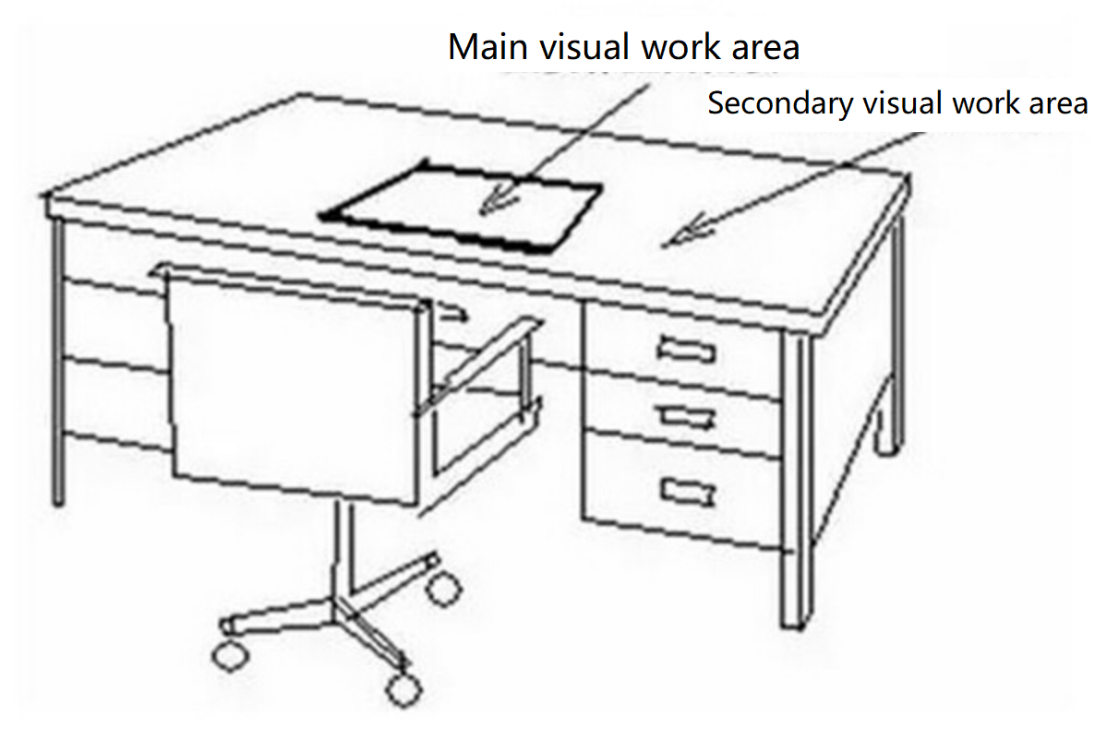
Figure: The main illumination area of the desk lamp is the main visual work area, and the surrounding area of the diffused light is the secondary visual work
A photometric amount derived from the action of radiation on a standard photometric observer. The unit is lumens (lm), 1lm=1cd/1sr. For photopic vision there are:
in the formula
dΦe(λ)/dλ--spectral distribution of radiant flux;
v(λ)--spectral light (apparent) efficiency;
Km--The maximum value of the spectral (apparent) efficacy of radiation, in lumens per watt (lm/W). In monochromatic radiation, the Km value under photopic conditions is 683lm/W (λm=555nm).
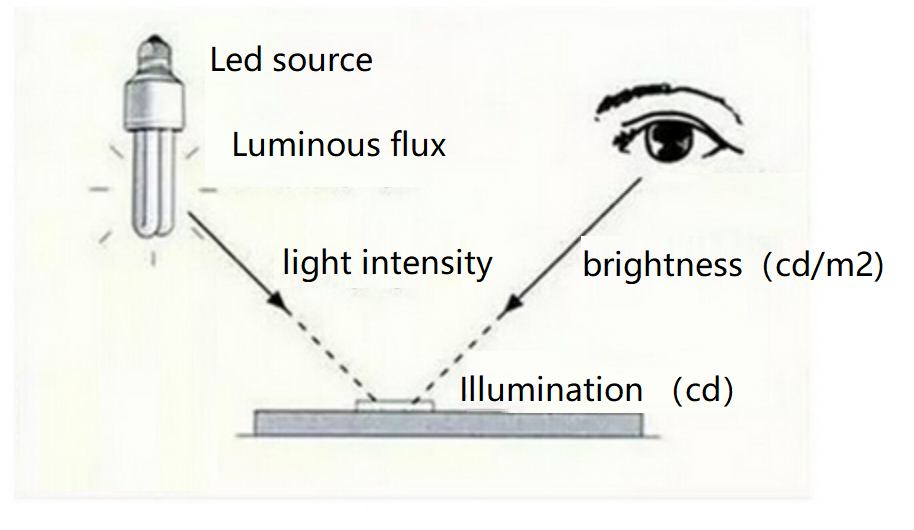
Figure: Schematic diagram of the principle of luminous flux
The luminous intensity of a luminous body in a given direction is the quotient of the luminous flux transmitted by the luminous body in the solid angle element dΩ of the direction divided by the solid angle element, that is, the luminous flux per unit solid angle. The unit is candela (cd), lcd=1lm/sr.
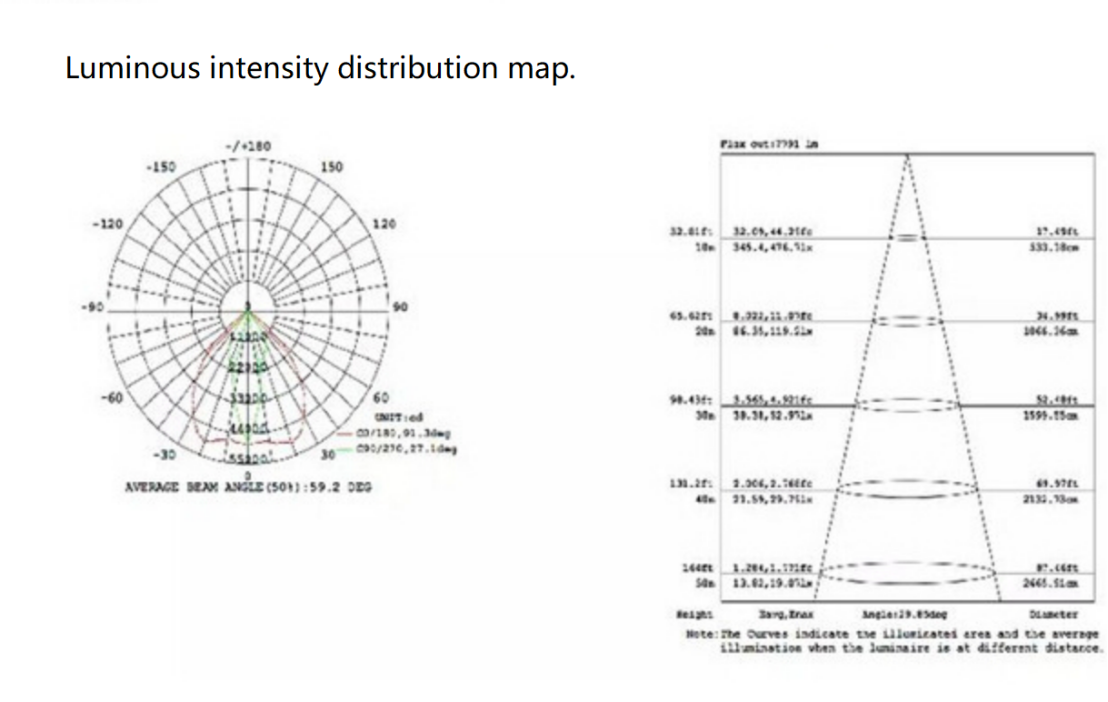
Figure: Schematic diagram of luminous intensity distribution
A quantity defined by the formula L=d2Φ/(dA·cosθ·dΩ) in candela per square meter (cd/m2).
in the formula
dΦ--the luminous flux (lm) transmitted by the beam element at a given point and including the solid angle dΩ of the given direction;
dA--beam cross-sectional area (m²) including a given point;
θ--The angle between the beam section normal and the beam direction.
Light intensity refers to the energy of visible light received per unit area, referred to as illuminance, in lux (Lux or Lx). A physical term used to indicate the intensity of light and the amount of light on the surface area of an object.
The calculation method is the quotient of the luminous flux dΦ incident on the surface element containing the point divided by the area dA of the surface element, the unit is lux (Lx), 1Lx=1Lx/m².
Many people confuse illuminance and brightness, how to distinguish? A picture to tell you!
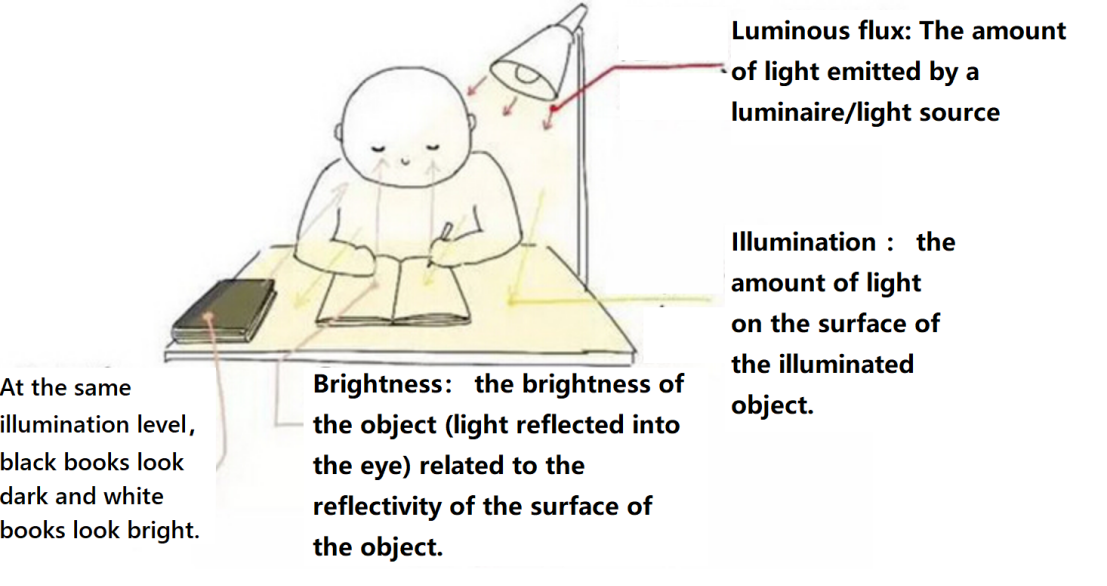
Figure: How brightness and illuminance are generated and differentiated.
So, in the same space, different basic tones have different requirements for contrast.
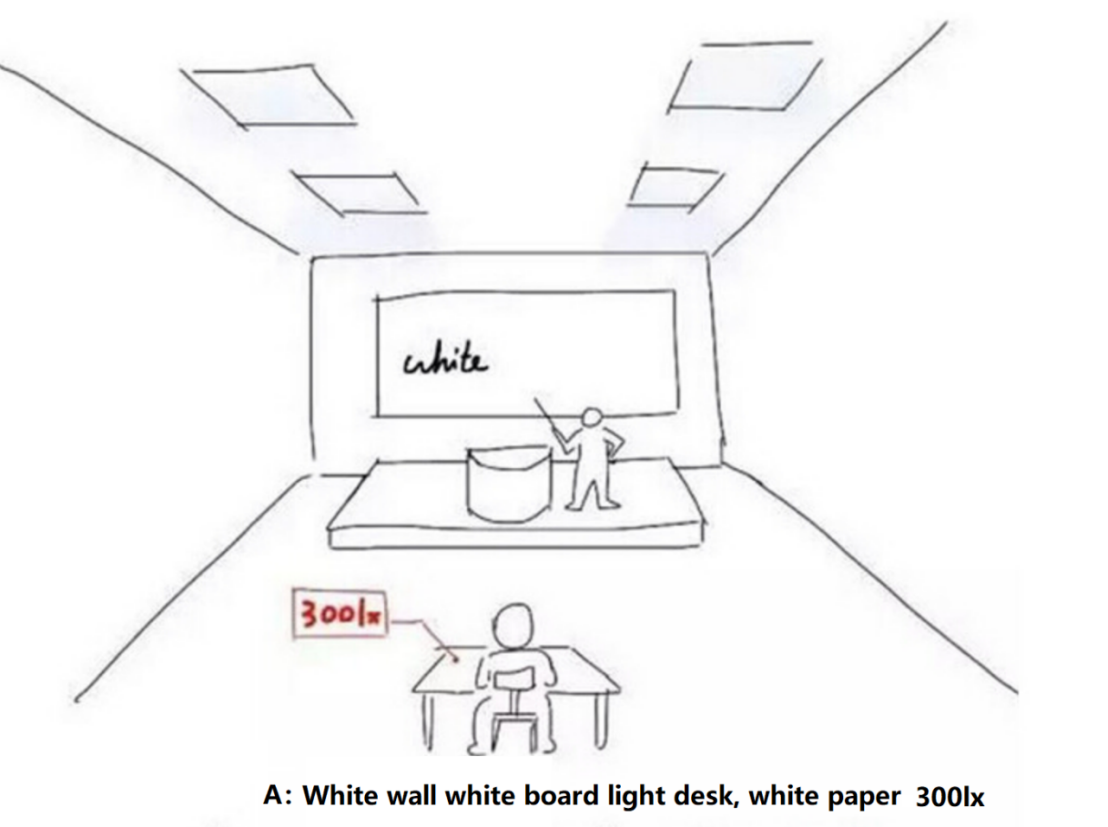
Figure: Requirements for classroom contrast in white-based shades.
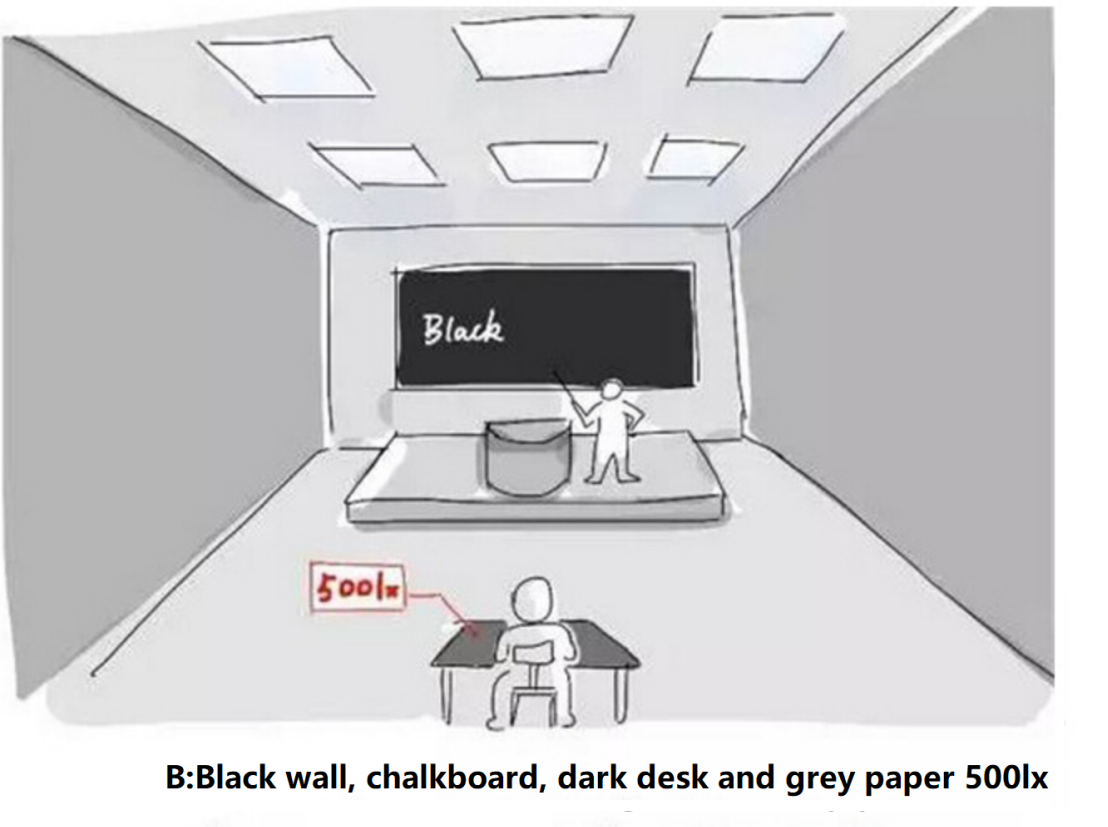
Figure: Classroom contrast requirements for black-based shades.
Very simply, it is the average value of the illuminance of each point on the specified surface illuminated by the light source.
The average illuminance on the specified surface shall not be lower than this value. It is the average illuminance on a specified surface at the moment when the lighting installation must be maintained.
A plane on which illuminance is measured or specified.
A plane on which work is performed.